Building a Skills-Based Organization: A Practical Starting Point

Two-thirds of the skills organizations need within five years will be entirely different from what's in demand today, according to McKinsey's 2026 workforce research. A job-title-based org structure — built around static roles reviewed once a year — simply can't keep pace with that rate of change. That's the core argument for a skills-based organization, and why internal talent marketplaces have become one of the fastest-growing categories in HR tech.
Why job titles are a bad proxy for capability
A job title tells you what someone was hired to do, not what they can actually do today. Skills change faster than titles get updated, especially for people who've picked up capabilities through projects rather than formal role changes. A skills-based model treats the workforce as a pool of demonstrated capabilities instead of a fixed hierarchy of positions.
What AI-powered talent marketplaces actually do
Modern internal talent marketplaces use resume parsing, job history, and ongoing learning data to build a live skills map, then match employees to open roles or projects based on skill fit — not just who applied. The more useful capability is surfacing people whose skills would never show up through a manager's mental map of the org chart: someone in a different department who's quietly built exactly the capability a project needs.
The cheaper starting point most teams skip
Buying a full marketplace platform before you have clean skills data is expensive and usually disappointing — the matching is only as good as the underlying map. A more realistic first step is building an accurate picture of where skill gaps and repeat knowledge requests actually cluster across the organization. The recurring questions and content gaps employees surface to an HR system are a real, low-cost signal for where those gaps live, long before any formal skills inventory exists — the same kind of signal people analytics is built to surface.
What to measure before you buy a platform
- How current is your skills data, and who's responsible for keeping it that way?
- Where are the highest-volume knowledge gaps today, and do they map to a role or a skill?
- Is the goal internal mobility, workforce planning, or both — the data requirements differ.
Skills-based transformation is a multi-year effort. Getting the first, unglamorous step right — knowing where the gaps actually are — matters more than which platform you eventually buy.
Sources
Frequently asked questions
What is a skills-based organization?
It's an operating model that evaluates and deploys employees based on their actual skills and capabilities rather than their job title or tenure. Roles, projects, and pay are built around demonstrated skills instead of a fixed org chart position.
What does an internal talent marketplace do?
An internal talent marketplace maps skills across the workforce using resume data, job history, and learning activity, then matches employees to open roles or projects based on skill fit and career trajectory — including people whose skills wouldn't surface through normal org chart navigation.
Why are skills-based models becoming more urgent now?
McKinsey estimates that two-thirds of the skills organizations need within five years will be entirely different from what's in demand today. A job-title-based structure can't adapt to that rate of change; a skills-based one can reallocate people as needs shift.
Do we need an enterprise talent marketplace platform to start?
No. Most organizations get more value starting with an accurate, continuously updated skills inventory than jumping straight to a full marketplace platform. The platform is only useful once there's real data underneath it.
Related reading
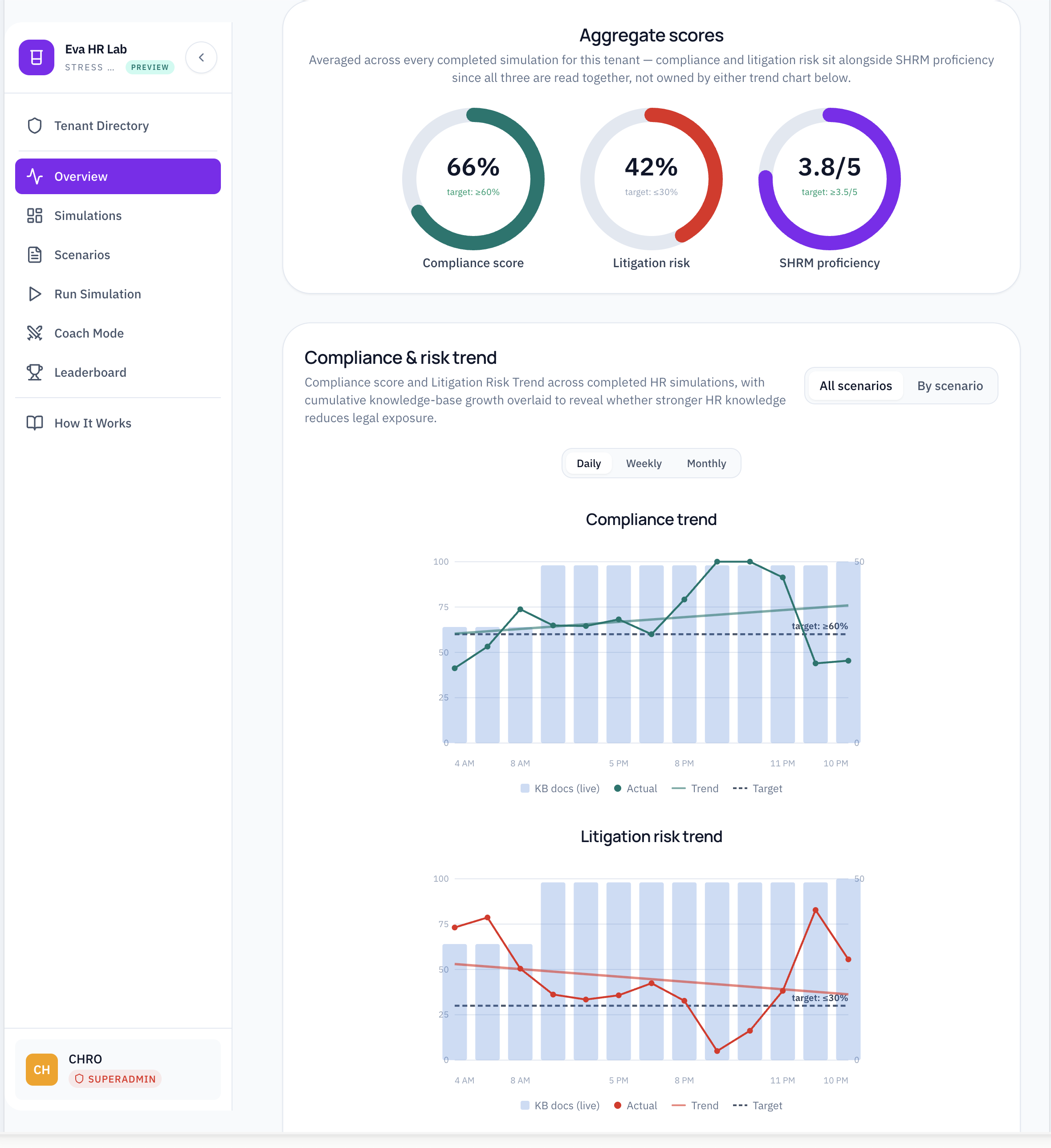
Stress-Test Your HR Team Before Reality Does
Eva HR Lab runs your organization through scenario-based simulations of the conversations that create litigation risk, and scores your team blind against Eva.

The EU AI Act's High-Risk Rules for HR AI Are Now in Force
The EU AI Act's high-risk obligations for employment AI are now active. Here's what changed for hiring, promotion, and monitoring tools, and what HR needs to check first.
See how Eva Insights surfaces the questions and gaps that reveal where skills are missing.
Explore Eva Insights